
How to measure a piece or machining before ordering?
GUIDE PRO — MÉTROLOGY OF ALU QUINCY
This guide is intended for carpenters, locksmiths and real estate maintenance technicians in France (Paris, Lyon, Marseille, Bordeaux) as well as throughout Europe (Germany, Belgium, Spain). It details, typology by typology, how to measure an aluminum carpentry piece — cremon, scab, lock, waste, seal — to order the correct reference of the first shot.
On an old or unmarked range, geometry takes precedence over appearance: two similar pieces may be incompatible with the tenth of a millimetre. A fair measure is a successful order, zero return, and a project that is moving forward. Here's the method.
Compare to data sheets listed on DirectAlu.com
Before you start: tools and good practices
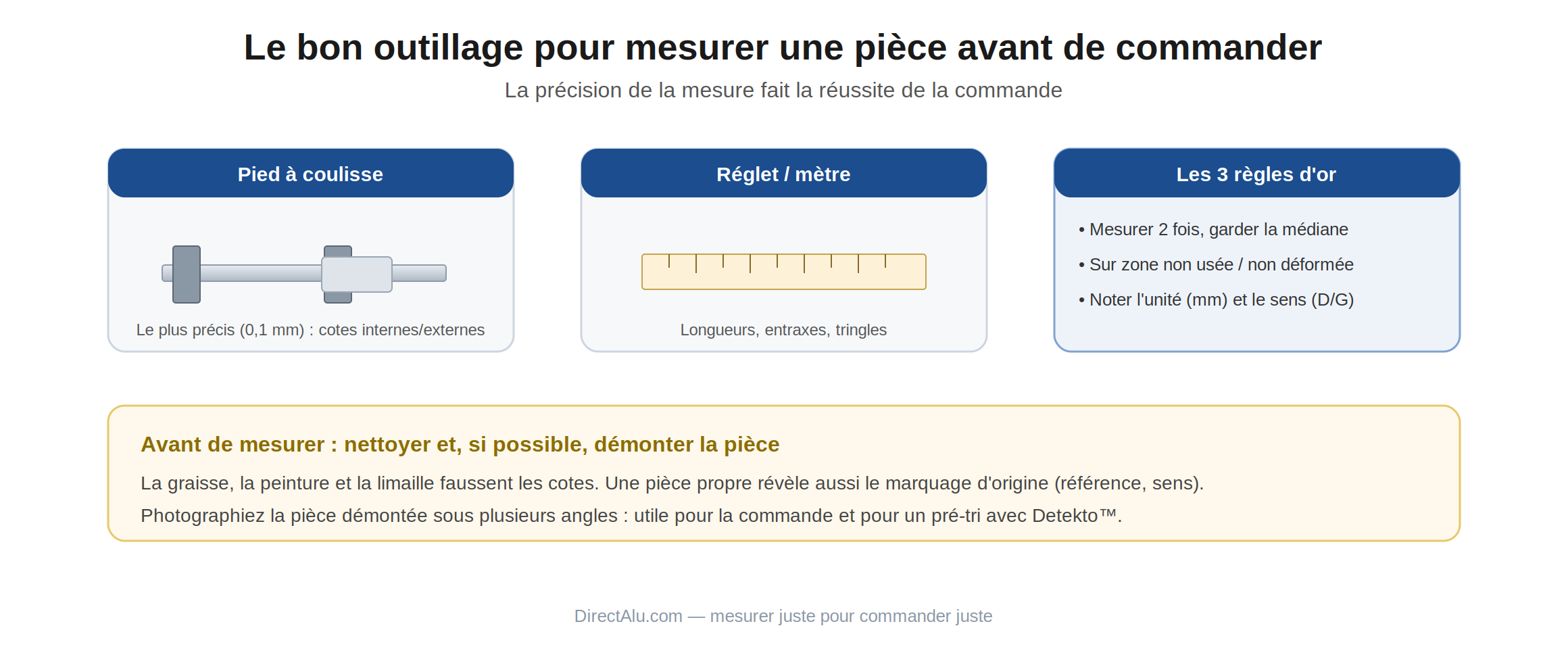
A good measure starts with the right tool and a prepared piece. The sliding foot is the reference instrument (accuracy to the tenth of a millimetre); A ruler or a metre is sufficient for lengths and entaxes. Before any measurement, clean and, if possible, remove the room.
The rule that avoids returns
Measure each rating twice and hold the median value, always on an unused area. Note the unit (mm) and direction (right / left). In case of doubt, the measure prevails over any visual resemblance.
1. Measure a cremon or handle
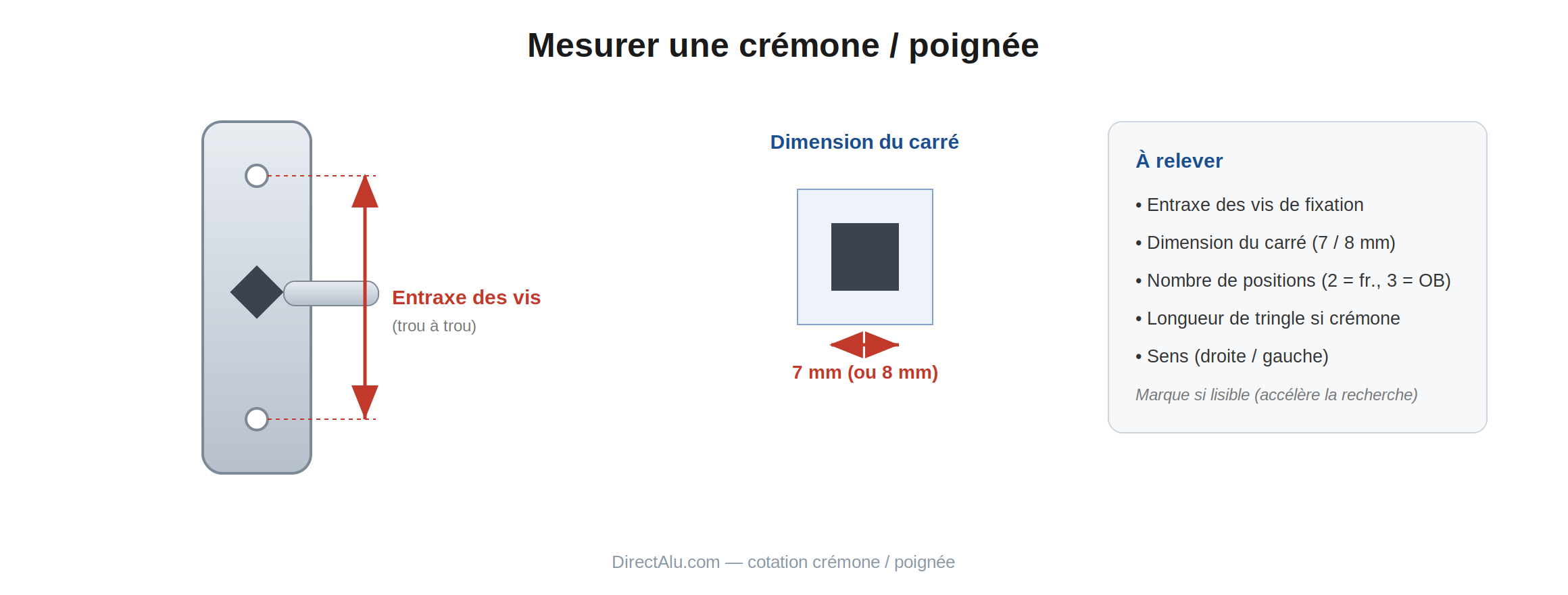
For a cremone or a handle, two dimensions control compatibility: the centre of the mounting screws (distance between the two holes of the plate) and the dimension of the drive square, usually 7 mm in carpentry, sometimes 8 mm. Add the number of positions of the handle, which distinguishes a cremone with French (2 positions) from an oscillo-beater (3 positions).
See also: How to identify an aluminium window handle?
2. Measure a sliding bay cart (galet)
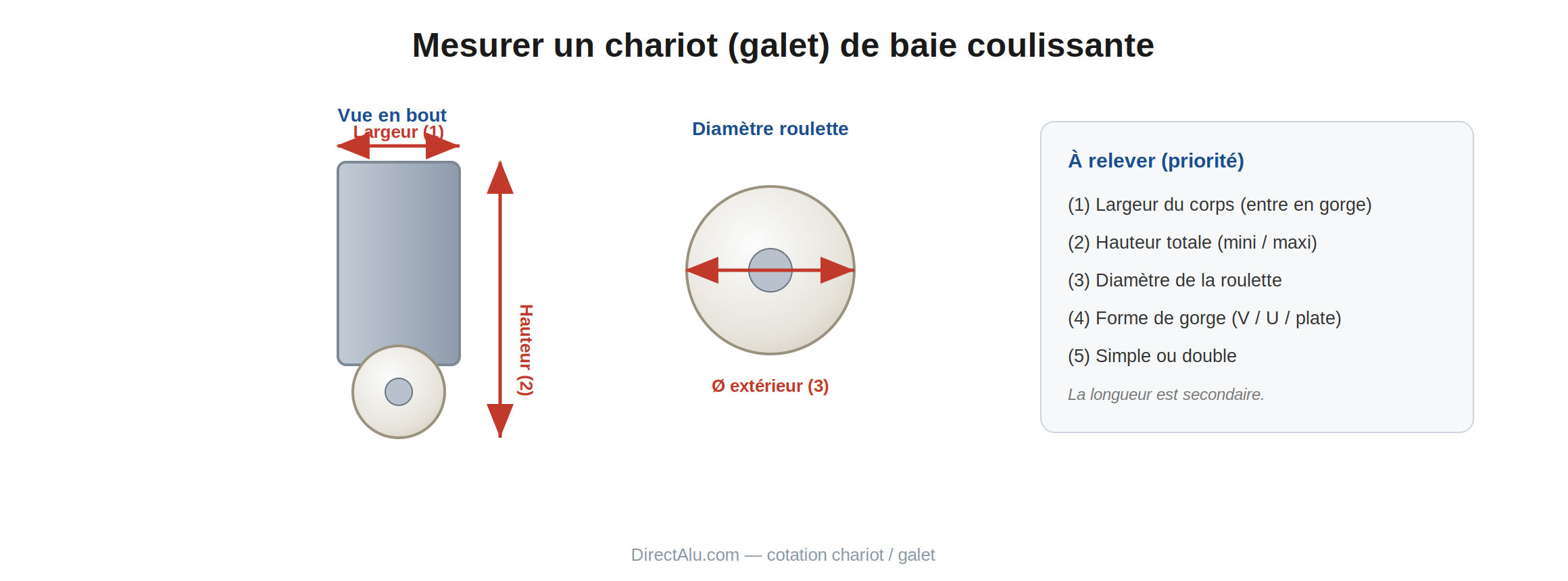
For a scab, the width of the body (which must be inserted in the throat of the profile) and the total height are priority; The length is secondary. Complete by the diameter of the roulette, its throat shape (V, U or flat) and the type — single or double trolley.
See also: How to identify a sliding bay scoop without reference.
3. Measuring a Lock
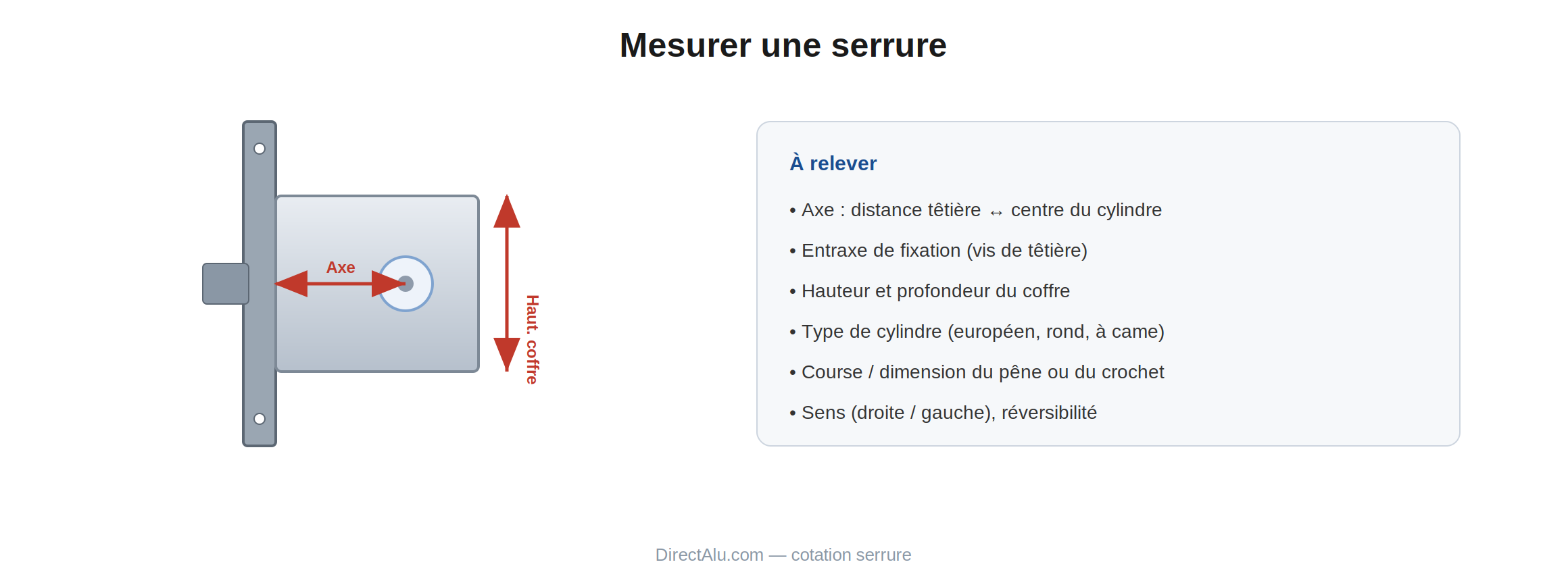
On a lock, first raise the axis: the distance between the headrest and the centre of the cylinder hole. Then the centre of the head screws, the height and depth of the trunk, and the type of cylinder (European, round, cam). Do not forget the stroke of the pêne or hook and the direction (right / left) and measure the width of the headband (16 mm, 20 mm, 22 mm or 24 mm).
See also: How to identify an aluminium window lock?
4. Measuring a waste or joint
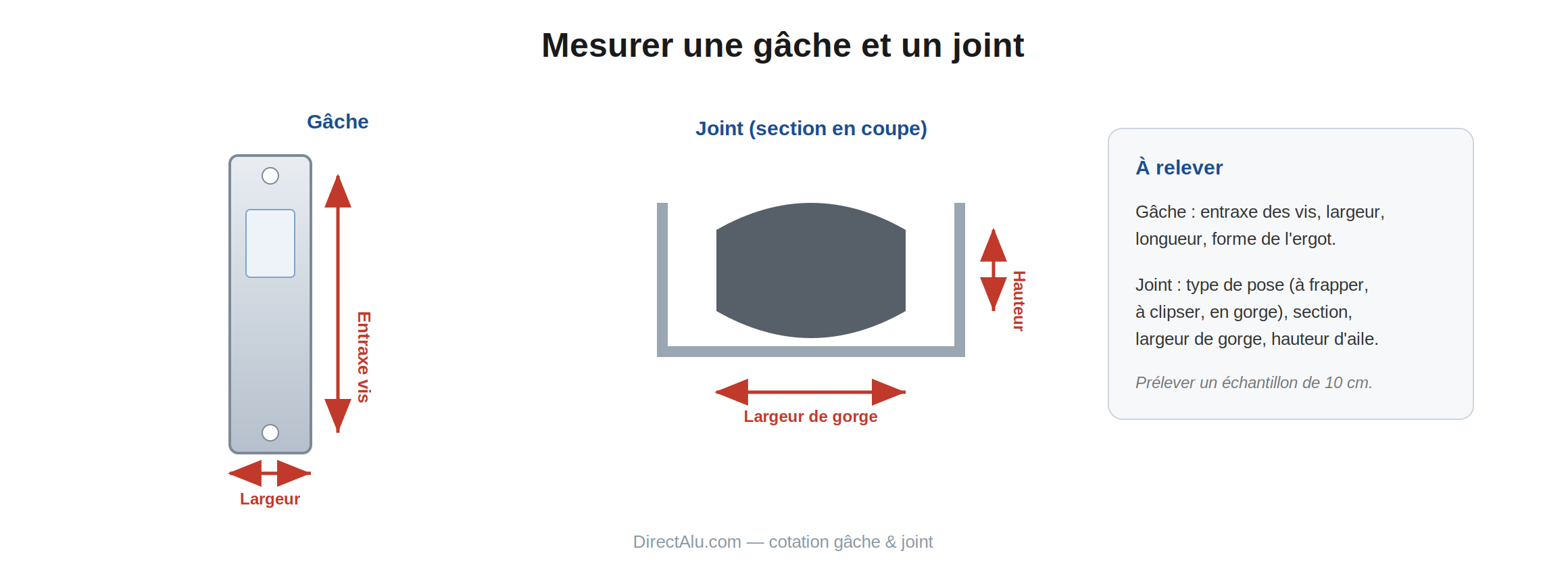
For a striker, raise the screw centreline, width, length and shape of the locking ear. For a joint, the essential is the type of pose (to hit, clip, throat), section, throat width and wing height. The most reliable: take a sample of 10 cm of joint to compare the profile.
5. Measure machining (drilling, cutting, cutting)
Beyond the parts, it is sometimes necessary to raise a machining on the profile in order for a new part to adapt to it, or to have a piece made to measure. Then pick up:
- The diameter and centre of the drills: for fixing screws or stem passage.
- The dimensions of the cut: length, width and angle rays of a cremon or lock cut.
- The position in relation to a edge: reference rating from the head, singing or end of the profile.
- The thickness of the profile: for screw length and part compatibility.
The template tip
For complex machining, make a template: place a sheet on the area and raise the contours in pencil, or photograph the cut next to a ruler. It's valuable for custom-made manufacturing.
6. DetektoTM: saving time on pre-tri
Once your ratings are in hand, DetektoTM, our IA parts recognition developed with Open Global Solutions (OGSo), accelerates the suite: photograph the piece, and the tool directs you to a short list of probable references. All you have to do is compare your measurements to the data sheets listed to validate. DetektoTM directs, the measure decides.
Try: Scan my room with DetektoTM.
Summary of ratings by typology
| Typology | Priority ratings |
|---|---|
| Cremon / handle | Screw centreline, square (7/8 mm), number of positions, rod length, direction. |
| Galet / trolley | Body width, height (mini/maxi), castor diameter, throat shape, single/double. |
| Lock | Axe (heading |
| Task | Screw interax, width, length, ergot shape. |
| Joint | Type of installation, section, throat width, wing height (10 cm sample). |
| Machinery | Diameter/center of drillings, cutting dimensions, rib from edge, thickness. |
Measuring well is also an eco-responsible gesture
A fair measure is a piece ordered just — a repaired carpentry rather than replaced. Each window preserved is a new aluminium profile that is not produced, a very energy-saving material, and less waste from construction. Measuring carefully is the first link in a circular economy approach to the second work — good for your profitability as well as for your CSR balance sheet.
From measurement to sustainable repair
By selling individually, promoting compatibility between brands and remaking obsolete parts tailored from your ratings, DirectAlu.com makes repair possible where others would have to change everything.
Find and order my room on DirectAlu.com
Frequently Asked Questions
What tool to measure a piece of hardware?
The slide foot is the reference tool (accuracy to the tenth of a millimetre) for internal and external ratings. A ruler or a metre is sufficient for lengths and entaxes.
What is the drive and why is it essential?
The centrepiece is the distance between two fixing points (e.g. the two screws of a plate, or the headrest and cylinder of a lock). It is often the rating that determines the compatibility of the part with the profile.
How do I measure a machining for a custom part?
Remove the drills (diameter, interax), cut dimensions and position from a reference edge. A paper template or photo with a ruler makes it easier to remanufacture.
Can I order from a simple photo?
DetektoTM can pre-orient the search from a photo, but the command must always be validated by the quoted ratings and the data sheet listed on the product.
Also read: How to find an old aluminium carpentry room? · How to identify an aluminium window lock?